net force
US /nɛt fɔrs/
・UK /net fɔ:s/
B1
n.NounThe overall force acting on an object, considering all individual forces and their directions.
The net force acting on the object is zero, so it remains at rest.
Video subtitles
The Moon's Orbit is WEIRD
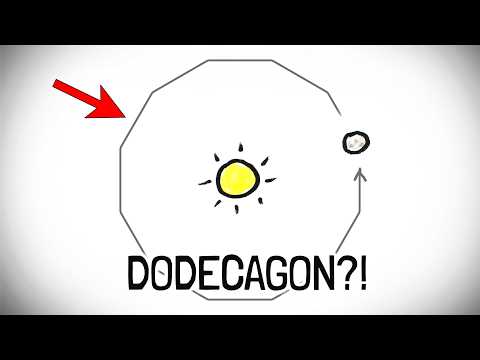
- That means the net force on the moon is always towards the sun, and that's why the moon's trajectory never curves outwards towards the earth.
That means the net force on the moon is always towards the sun, and that's why the moon's trajectory never curves outwards towards the earth.
- There's never a net force that would pull it that way.
There's never a net force that would pull it that way.
Newton's Laws: Crash Course Physics #5

- Which is just another way of saying that to change the way something moves, to give it acceleration, you need a net force.
Which is just another way of saying that to change the way something moves, to give it acceleration, you need a net force.
- it ACCELERATION -- you need a net force.
it ACCELERATION -- you need a net force.
Most Collisions Are Secretly in One Dimension
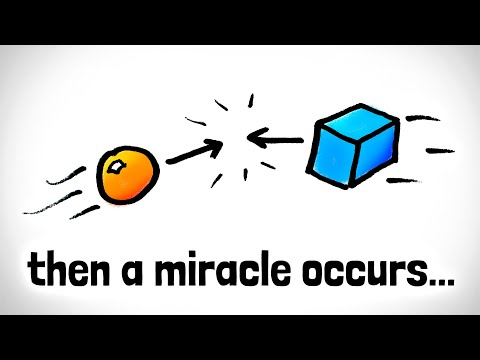
- Most of the time, collisions in 2D or 3D result in a net force between the objects which is only in one direction—typically perpendicular to the surface where the objects collide, though if the surface is complicated or there's friction, it might be a different direction.
Most of the time, collisions in 2D or 3D result in a net force between the objects which is only in one direction—typically perpendicular to the surface where the objects collide, though if the surface is complicated or there's friction, it might be a different direction.
- Most of the time, collisions in 2D or 3D result in a net force between the objects which is only in one direction—typically perpendicular to the surface where the objects collide, though if the surface is complicated or there's friction, it might be a different direction.
Most of the time, collisions in 2D or 3D result in a net force between the objects which is only in one direction—typically perpendicular to the surface where the objects collide, though if the surface is complicated or there's friction, it might be a different direction.
How Do Airplanes Fly?

- Airplanes stay in the air because of one simple fact: there is no net force on them.
Airplanes stay in the air because of one simple fact: there is no net force on them.
- And with no net force, an object at rest stays at rest, and an object in motion stays that way.
And with no net force, an object at rest stays at rest, and an object in motion stays that way.